Translate into your preferred language

Showing posts with label CJEU opinions. Show all posts

Thursday, June 9, 2016

CJEU Case C 230/15: Advocate General advices interpretation "à caractère non formaliste"

On 26 May, European Court of Justice Advocate-General Saugmandsgaard Øe delivered his opinion in case C 230/15 (ECLI:EU:C:2016:366). The case may sound trivial: the The Hague court asked (in ECLI:NL:RBDHA:2015:5716) whether the Dutch courts and/or the Luxembourg courts have jurisdiction regarding the validity of Benelux mark 0877058 "Brite-Strike"?

The case is however relevant to put to rest a difference of judicial opinion on which jurisdiction rules apply regarding Benelux marks (and Benelux industrial designs): those in the Benelux Convention on Intellectual Property (BCIP) or those in the Brussels I regulation (EC 44/2001 when this case started, presently EU 1215/2012). See earlier posts on the exact questions referred to CJEU and how Belgian and Dutch judges have treated the matter in the past years.

Saugmandsgaard Øe is a new CJEU AG, so we have not seen much about him. In this opinion he is -in my opinion- sensible, his opinion can easily be followed, but it seems also slightly activist. Despite the wealth of judgements calling for a literal interpretation of Brussels I, Øe here strongly relies on the intention of the regulation. But I am getting ahead of myself, let's examine his points first:

This is a general problem

While the case at hand may be solved by giving a narrow answer regarding jurisdiction (focussing on a trademark invalidity rather than infringement of rights etc), the AG agrees with the Dutch court that the general problem is the hierarchy between BCIP and Brussels I and suggests the questions is treated that way (few! any narrowing down would give rise to more questions!). 

Two formal requirements; and one more...

The AG first notes that the conflict between other conventions is treated in Article 71.1 and 71.2(a)
1. This Regulation shall not affect any conventions to which the Member States are parties and which in relation to particular matters, govern jurisdiction or the recognition or enforcement of judgments. 
2. With a view to its uniform interpretation, paragraph 1 shall be applied in the following manner:
  1. (a)  this Regulation shall not prevent a court of a Member State, which is a party to a convention on a particular matter, from assuming jurisdiction in accordance with that convention, even where the defendant is domiciled in another Member State which is not a party to that convention. The court hearing the action shall, in any event, apply Article 26 of this Regulation; (...)
and that thus -unlike other private international law EU regulations- it does not explicitly replace all pre-existing conventions between EU states. He concludes that 3 requirements have to be met for conventions to have precedence over Brussels I:

  1. It should govern a particular matter
  2. the Member States should already be a party to the other convention
  3. The jurisdiction rules cannot go against the objectives of EU law.
Point 1: A particular matter
The first point is relatively easy: the jurisdiction rules only govern Benelux Trademarks and Designs (the AG can't stop himself from pointing out that despite the wide scope suggested by the name of the convention on Intellectual Property, it only governs those two types), that that's clearly a particular matter. 

Point 2: EU countries should already be a party
This rule was new in the Regulation compared to the Brussels convention it replaced. So from around 2001 (approval of the regulation) or 2003 (entry into force) no new conventions could take precedence anymore. The BCIP is from 2005 and thus clearly a younger (or: posterior) convention and thus the European Commission argued that the convention should not take precedence. Saugsmandsgaard however notices the special character of the 2005 convention: it was a new convention merging and modernising  2 conventions regarding Benelux trademarks (1971) and industrial designs (1975). The jurisdiction rules in those conventions were essentially the same and were merely copied into the 2005 convention. Saugsmandsgaard thus concludes (in an approach he considers "à caractère non formaliste") the jurisdiction rules in relation to the matter they governed (trademarks/designs) should be considered older: the BCIP should thus NOT be regarded a posterior convention. 
point 3: The jurisdiction rules cannot go against the objectives of EU law
The third point doesn't stem from an interpretation of the text of article 71 per se, but from CJEU case law. The AG refers to C 533/08 (ECLI:EU:C:2010:243, TNT Express v AXA), requires those rules not to be applied against the objectives of EU law:
 While it is apparent from the foregoing considerations that Article 71 of Regulation No 44/2001 provides, in relation to matters governed by specialised conventions, for the application of those conventions, the fact remains that their application cannot compromise the principles which underlie judicial cooperation in civil and commercial matters in the European Union, such as the principles, recalled in recitals 6, 11, 12 and 15 to 17 in the preamble to Regulation No 44/2001, of free movement of judgments in civil and commercial matters, predictability as to the courts having jurisdiction and therefore legal certainty for litigants, sound administration of justice, minimisation of the risk of concurrent proceedings, and mutual trust in the administration of justice in the European Union.
In evaluating whether in BCIP this criterion is met, the AG notes that unitary intellectual property rights (the EU Trademark, the Community Design, the unitary patent, but even the European patent as far as proceedings for the EPO are concerned) are always treated specifically as the general Brussels I rules are not adapted to it. The AG thus argues that using the BCIP obtains a better result than applying 44/2001. 

Conclusion

The AG thus concludes that BCIP jurisdiction rules should govern Benelux trademarks and designs and thus dismisses decision ECLI:NL:GHDHA:2013:4466 of the Hague Court of Appeal of 2013 that started the confusion: before that case BCIP was always applied without discussion, but that court came to the opposite conclusion (Brussels I prevails) and was so certain that it explicitly remarked that it deemed CJEU questions not necessary. If followed, that is a welcome and sensible outcome!

Thursday, August 6, 2015

Hague Evidence Convention and the EU: did member state loose competence?

The Hague Evidence convention was already concluded 45 years ago, but it has lost not much of its relevance. The Convention on the Taking of Evidence Abroad in Civil or Commercial Matters, as it is formally called handles preserving evidence for later civil litigation in cross border situations and thus forms, with 58 parties, an important convention in Private International Law.

The European Union has similar rules in place since the 1206/2001 Regulation on "cooperation between the courts of the Member States in the taking of evidence in civil or commercial matters", which explicitly names the Hague convention and replaces it in situations between member states. One of the reasons for adopting it, was that not all EU member states were parties (still Belgium, Ireland and Austria are non-parties).

One of the peculiarities of the Evidence convention is, that it allows member states of the Hague Conference (in 1970) to sign and ratify the convention, and other states to accede. Contrary to most conventions (but as is the case often with Hague conventions), there is a difference in legal effect of accession and ratification. The convention applies always between all ratifying states, but only between acceding states after their accession has been explicitly accepted by a ratifying state (or an acceding state that acceded earlier). The Hague Conference maintenance a nice excel sheet following acceptance, from which can be seen, for example, that the recent accession of Armenia has only effect with respect to 11 states (including the EU countries Czech Republic, Bulgaria, Germany)

In the past, EU member states have accepted new acceding states at their own initiative and pace, but is this still allowed or should they ask permission from the EU and approve accession of other states "in the interest of the European Union"? This post investigates the present situation, and -to stay with our example- whether the acceptances by Czech Republic, Italy and Germany of Brazil's accession without the approval of the EU are lawful.

Internal competence means external competence
The first question to be asked, is whether the EU has competence with regards to the Hague Evidence Convention. The EU is not a party, and "only" 25 of its 28 member states are, and matters within the EU are now falling outside the scope of the Convention, as the Regulation has replaced them. Nevertheless, in the famous opinion regarding the Lugano convention (Case 1/03, ECLI:EU:C:2006:81), the European Court of Justice  confirmed that if the EU has regulated a matter internally (in this case through the Execution regulation 44/2001), that also gives it competence for externally (the Lugano convention mostly the same text, but between the EU and EFTA states). The mere similarity between the systems makes that the two may "effect eachother". In the case between the Evidence REgulation and Convention this similarity clearly exists.

"Accepting an accession" is a treaty action
What is the acceptation of an accession? According to CJEU in opinion 1/13, and based on teh Vienna Convention on the law of treaties, the acceptance of an accession constitutes a treaty-making action. Thus if the EU would be (exclusively) competent to conclude the treaty, it should be (exclusively) competent to accept an accession. That seems crystal clear.

Exclusive or Shared competence?
Is the competence exclusive or shared? That's for me an open question, but -given the similarities in the fields- I assume, we are talking exclusive competence of the EU here.

Conclusion: 
The conclusion from this exercise is that acceptance of accessions of the Hague Evidence Convention falls in the (probably exclusive) competence of the EU. That is already the case  for some years (since 2001 when the Evidence Regulation was concluded?), but this became only apparent when acceptance of Hague Child Abduction acceptances were discussed (2012), and only became very clear once CJEU opinion 1/13 was given by 14 October 2014.
So, to return to our Brazil example; were Bulgaria, Czech and Germany at fault? They accepted after 1/13 was given, and thus it seems they are to blame for accepting without being competent to.

Other Hague conventions involved?
With competence of the EU established in the Hague Adoption Convention (explicitly) and the Hague Evidence Convention (by me at least;-), the story might not be over. Opinion 1/13 should also be evaluated in light of the 1996 Hague "Protection of Children" convention (similar provisions in Brussels II: 2201/2003), the 1965 Hague Service Convention (similar to Service Regulations 1393/2007 and 1348/2000). Those conventions however do not  allow member states to accept an accession, but allow them to prevent entry into force by lodging an objection within 6 months. There are more Hague conventions with relevant provisions and where the EU has (at least some) competence (the 1980 Access to justice convention, the Access to Justice convention), but the relevance of those conventions in daily practice is much lower. Last but certainly not least, the Hague Apostille Convention, the most ratified Hague convention with over 100 parties, also has the possibility of objection to accessions, and may (and here I am guessing) also be partly under EU competence (many of the documents falling under that convention fall under an easier EU system)...

Busy period for EC?
The European Commission will have a busy time in proposing regulations (1 for each acceding member state) for acceptance of the two conventions, or it will face delay in implementation. That is not just a legislative matter, but also a practical one: what criteria are to be fulfilled for accepting (or in the case of some conventions: not objecting) acceding countries? Should a national authority be in place (required by most convnetions and necessary for its functioning)? Or should a state show it can comply with the obligations? Do diplomatic conflicts factor in? It would be wise to have a discussion on those matters and see if a regulation can be proposed that delegates the responsibility for accepting to an EU institution or a working group of member states if relevant criteria have been met. That seems the only way to do this transparently and fast.
In the case of the Hague Service Convention and the Child Protection Convention, time is even more of the essence, because entry into force of a regulation allowing member states to reject accession of an acceding state within 6 months of the accession seems much too fast for the EU legislative machine.


Wednesday, June 3, 2015

BREAKING: The Hague court asks questions to CJEU regarding jurisdiction in Benelux trademark disputes

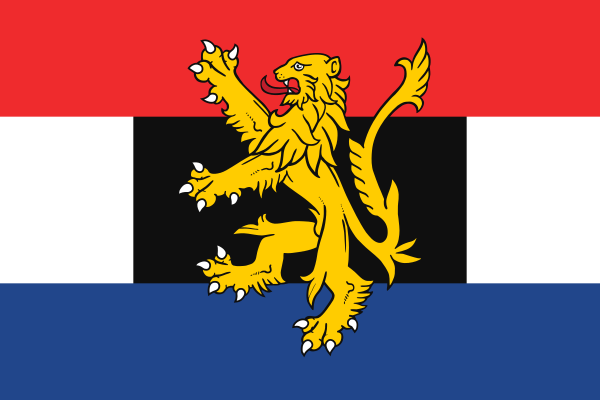
The Benelux is not a Member State of the European Union,
 but it's  fully part of the  territory of the EU, so what courts 
would be designated  if the Brussels I regulation is used?
 [image copied from my update on the issue of January]
Last year I wrote a blogpost on an unintended consequence of the consolidation of two treaties (Benelux Trademark Law and Benelux Industrial Designs Law) into a single treaty: the 2005  Benelux Convention on Intellectual Property. While the jurisdiction provisions in the treaty were copy-pasted from the older treaties, the treaty itself was a new one. In the EU, jurisdiction is governed by the Brussels I regulation (44/2001 until 2015; now a recast is in place), which states that jurisdiction in treaties from before that regulation (here: the 2 old Benelux treaties) would take precedence over the Regulation. This does not hold however for later ("posterior") treaties.

The Benelux judges seem never to have realized this and always based their jurisdiction on Benelux law, until in November 2013 the Court of Appeal of The Hague argued that clearly now Brussels I should take precedence; a choice with unintended consequences as Brussels I has never been written with a "common IP right to several member states" (as is the case with the Benelux trademark and the Benelux design) [note that jurisdiction for the community trademark is excluded from Brussels I; and that for the unitary patent Brussels I was changed to reflect the situation of a court common to several member states; in this case we are talking about several courts in 3 countries that may or may not have jurisdiction]. The The Hague court concluded that the Brussels I regulation prevailed, and was sure enough not to deem questions to the Court of Justice of the European Union necessary.


In October 2014 however, the court of first instance of The Hague was faced with the same question and suggested questions to CJEU and possibly the Benelux Court of Justice. The case concerns Brite Strike, which markets itself [copied from my previous post for convencience] ("Two police officers started Brite-Strike Technologies Inc. because they were simply not satisfied with what the "top makers" of tactical lights offered for the needs of police officers") Technologies Inc (a US company) v Brite Strike Technologies SA (a Luxembourg company) (ECLI:NL:RBDHA:2014:13187). The matter concerns alleged bad faith in the registration of the Benelux trademark Brite Strike by the Luxembourg company, which was a distributor of the US company. Article 4.6(1) BCIP would render the Luxembourg judge exclusively competent, while article 22(4) of the Brussels I regulation points to the judges of the Benelux (at least, that is one interpretation).

We are half a year further, and ie-forum reports the questions have been finalized and sent to CJEU in Luxembourg (Case C-230/15). The Luxembourg defendant meanwhile is without legal representation in the case and has not reacted to any of the proposed questions.

The first three questions are very similar to the questions suggested in October, while the fourth one has been dropped. the questions (now available in their official translation) are below:


1) Must the Benelux Convention on Intellectual Property (Trademarks and Designs) (BCIP) (whether or not on the grounds set out in paragraphs 28 to 34 of the judgment of the Gerechtshof Den Haag (Regional Court of Appeal, The Hague) of 26 November 2013) be considered to be a subsequent convention, with the result that Article 4.6 of the BCIP cannot be considered to be a special rule for the purposes of Article 71 of Regulation No 44/2001 [The Brussels I regulation]? 
If that question is answered in the affirmative: 
2) Does it follow from Article 22(4) of Regulation No 44/2001 that the Belgian, Netherlands and Luxembourg courts all have international jurisdiction to take cognisance of the dispute? 
3) If not, how should it be determined, in a case such as the present, whether the Belgian, Netherlands or Luxembourg courts have international jurisdiction? Can Article 4.6 of the BCIP (nonetheless) be applied with a view to (further) determining international jurisdiction?

[copying in my evaluation of October again] It is hard to evaluate what the answers of ECJ and/or BCJ will be, but indeed, the questions posed seem indeed to be the relevant questions. If I had to give my best guess of the answers I'd say:
I: This is a clash between following the letter of Brussels I (rendering BCIP posterior) or the intent of the EU and Benelux legislator (rendering BCIP anterior and applicable). Most clarity will be given if the answer is in the negative: when Brussels I is to prevail, a regulation should be applied which was never written with the peculiarities of the Benelux territory in mind, which is bound to result in more questions. However, the ECJ is known to favour the literal interpretation of Brussels I for the sake of predictability, so I think the answer will be: YES
II: The second question is regarding Brussels I 22(4) and gives jurisdiction to the courts of the Member State in which the deposit or registration has been applied for (this can be: the Benelux, rendering all courts competent; or where the physical application took place: at the trademark office in The Hague, Netherlands, rendering always NL competent), has taken place (idem) or is under the terms of a Community instrument (not applicable?) or an international convention (BCIP) deemed (the convention explicitly excludes the location of registration as a determinant in jurisdiction, and would point to the Benelux courts in general) to have taken place. I would assume that because of the last part of the sentence, courts from all 3 countries are competent.
III: This may be the trickiest question... IF the Benelux is to be regarded a separate territory for the application of Brussels I, then the internal law of Benelux (BCIP?) should determine jurisdiction. However, if multiple courts have international jurisdiction (in this case NL, BE, LU) under Brussels
I, normally they all have jurisdiction, and the lis pendens doctrine will render the court first seized competent to hear the case. Again, I don't see much reason why ECJ would not take a literal meaning of 22(4), render all courts competent, and the location within Benelux dependent on the court first seized.

More information:
There is not much more available on this case on the web. It was mentioned by the IPKat blog, the Marques blog and IPCuria; and the Dutch government has published some additional information (as they do with all CJEU cases) in Dutch.
----
This post was last updated on 8 September to include the formal translation of the questions and an update of available information on the web. 

Monday, October 27, 2014

Did Benelux trademark and design legislation become younger than the Brussels Regulation (and does that matter?)?

In 2005, the Benelux countries (Netherlands, Belgium, Luxembourg) did some long overdue house keeping. They merged their separate Trademark and Designs treaties into a single "Benelux Treaty for Industrial Property", BCIP (beware, while this suggests "all IP" is in, only the Trademark and design IP has been unified in the Benelux, and patents, copyright etc are not included) which thus became the legal basis for the Benelux Trademark and the Benelux Industrial Designs.

As is the case with new treaties on the same subject, much of the subject matter was copy-pasted from the previous treaties, which probably both saves negotiation time, and also allows the new treaty to benefit from the case law already available for the provisions. The merger may have an important (and certainly unintended) consequence: because the convention has been concluded after entry into force of the Brussels I regulation  (which governs which EU court has jurisdiction in international cases, Regulatation 44/2001: Council Regulation on jurisdiction and the recognition and enforcement of judgments in civil and commercial matters) it may need to be classified as a "posterior" (later) treaty. Unlike similar instruments (Article 57 of the Brussels convention that preceded the Brussels Regulation) there is a difference  anterior (earlier) and posterior treaties. In cases of conflict between the Brussels I regulation and a posterior treaty, the Brussels I provisions prevail and in Article 71 only anterior conventions can be applied when governing specific subjects.

So the basic question is: should the same provisions (jurisdiction in Benelux IP), with respect to the same IP forms (Benelux Trademarks/Benelux Designs) in a different treaty be prevailing over the Brussels I regulation (as is the case with amended conventions), or should Brussels I be prevailing over them (as is the case with posterior treaties)?

The Court of Appeal of The Hague (Gerechtshof Den Haag) was sufficiently convinced that Brussels I prevailed, and decided that it was thus not necessary to request a preliminary ruling. In its December 2013 decision in H&M v. G-Star (ECLI:NL:GHDHA:2013:4466) regarding infringement of a Benelux trademark of jeans it based its jurisdiction on Article 5(3) of Brussels I as there was a (treat of) infringement in the Netherlands. In line with the Pinckney decision (ECLI:EU:C:2013:635), in infringement proceedings of IP rights, the value of the claim was to be determined there based on the infringement in the member state of the court concerned (and not in the rest of the EU). Without further argumentation, the court stated that as the Benelux Trademark is a unitary right in 3 countries, the "member state concerned" was to be understood as the three Benelux countries.

In April 2014, the the Court of First Instance of The Hague (Rechtbank Den Haag) ECLI:NL:RBDHA:2014:5078, based its jurisdiction-argument on the reasoning of the verdict of the Gerechtshof (prevalence of Brussels I) in PT Mitra Prodin (commercially acting as "JWARE" (Indonesia) v Vandenberg Special Products BV, in combination with (to the extent that Brussels I would be fully determine jurisdiction within the Benelux) BCIP. The case concerned the use of the word mark "Cones"; a Benelux and Community Trademark of Vandenberg, considered not valid according by JWare. JWare  used the term cones for its pre rolled cigarette paper. The judge didn't seem fully convinced as he indicated that using this reasoning also because it was not contested by JWare, and that it was no problem that the defendant had not reacted, as the decision to apply Brussels I resulted in a for him favourable judgement. The case moved to the location of the defendant (the Court of Rotterdam) as the court didn't consider to be relatively competent; both if relative competence would need to be based on the BCIP and on the Dutch Civil Procedure Law (note that Brussels I does only confer international competence, but not within a country).

The same reasoning (international competence for the Dutch court based on Brussels I, and no explicit decision on whether relative competence should be based on either Dutch Civil Procedure Law or BCIP) was followed by
*the The Hague court in BNP Paribas v Binckbank (ECLI:NL:RBDHA:2014:11184) regarding use of the word "Turbo".
* Brunel v Brunet (ECLI:NL:RBDHA:2014:7854, Article 2)
*"Het ijs van Columbus" case (ECLI:NL:RBDHA:2014:7508) (Article 2)
*Daamen v Vanguard (Python grade mark in safety shoes, ECLI:NL:RBDHA:2014:7104, which included both Article 2 and Article 6(1) jurisdiction)...
*Paperclip (stichting Paperclip v NCRV, ECLI:NL:RBDHA:2014:5261, Article 2). The court here stated it saw no reason to give the parties the possibility to comment whether Brussels I or BCIP would apply, as it would give the same result

Also in the Rummicub case (ECLI:NL:RBDHA:2014:9918) of the The Hague court, Brussels I was taken as a basis for NL-jurisdiction, in combination -to the extend needed to confer jurisdiction on the court- with 4.6 BCIP (the implicit question seemed to be: IF with Brussels I the judges of the (all?) Benelux have jurisdiction, BCIP may be needed to decide wether within that territory the Dutch judge has jurisdiction).

In August 2014, the Court of Rechtbank Den Haag ECLI:NL:RBDHA:2014:10760) in Bacardi v Seva based jurisdiction on Article 2 (jurisdiction of the state where the defendant is domiciled) of the Brussels I regulation (it would seem however that, as Bacardi is domiciled in non-member state Liechtenstein, not the Brussels I regulation, but the Lugano convention 2007 would apply. Article 67 of that treaty does however allow for specific conventions on specific matters to prevail; which in my assessment would have required the judge to basis its judgement on the Benelux Convention on Intellectual Property (BCIP)! Liechtenstein is not a party to Lugano, so that doesn't apply... Why does Brussels I apply? In H&M v Gstart the reasoning was followed that the international character of Benelux Trademarks made the case international and thus Brussels I would apply. However, article 4.6(1) of BCIP also gives jurisdiction to the court of the residence of the defendant, so there is no different effect here).

In Sojuzplodoimport v Spirits (ECLI:NL:RBDHA:2014:9739 (in a continuing saga of who became the rights holder to Vodka related IP rights in the wake of the collapse of the Soviet Union), the Court of First Instance of The Hague did not know how to determine its jurisdiction in relation to two related defendants and had options (while considering that article 22(4) of Brussels I rendered jurisdiction on the courts of the Benelux) determining jurisdiction within the Benelux:
*Brussels I, Article 6(1), for which there was not sufficient relation between the defendants, and jurisdiction should be denied
*BCIP, Article 4.6(5): which would lead to jurisdiction
*Rv109, the Dutch article, based on Article 6(1), but which -in the opinion of the judge- would allow for jurisdiction, as the court saw no reason to render the case law of the Brussels regulation fully applicable on the Dutch article.
The situation is complicated because of the interplay between absolute and relative and absolute competence and the possibility to use national law along Benelux/EU law in determining relative competence. The court therefore considered asking preliminary questions regarding jurisdiction to the  European Court of Justice (regarding Brussels I) and/or the Benelux Court of Justice (regarding BCIP). While we don't know how the case was resolved, but the court has made it clear last week that questions will not be asked in this matter...

The The Hague Court of First Instance may well have a second chance to ask preliminary questions, in Brite Strike ("Two police officers started Brite-Strike Technologies Inc. because they were simply not satisfied with what the "top makers" of tactical lights offered for the needs of police officers") Technologies Inc v Brite Strike Technologies SA (ECLI:NL:RBDHA:2014:13187). The matter concerns the use of a Benelux trademark with Brite Strike Technologies being domiciled in Luxembourg. Article 4.6(1) BCIP did render the Luxembourgian judge competent, while article 22(4) of the Brussels I regulation points to the judges of the Benelux (at least, that is one interpretation). The court therefore suggested the following questions (translation is from me):
I. Dient het BVIE (op de in het arrest van het gerechtshof Den Haag van 26 november 2013, overwegingen 28 - 34 genoemde gronden) te worden aangemerkt als een posterieur verdrag zodat artikel 4.6 BVIE niet kan worden aangemerkt als een bijzondere regeling in de zin van artikel 71 EEX-Vo?
Should BCIP (based on the reasoning in 28-34 in ECLI:NL:GHDHA:2013:4466) be considered a posterior treaty, so that Article 4.6 BCIP can not be regarded as a particular matter in the sense of Article 71 Brussels I?

Indien deze vraag bevestigend wordt beantwoord:
If this question is answered in the affirmative:II. Volgt uit artikel 22 lid 4 EEX-Vo dat zowel de Belgische, als de Nederlandse en de Luxemburgse rechter internationaal bevoegd zijn van het geschil kennis te nemen?
Does it follow from Article 22(4) Brussels I that both the Belgian, Dutch and Luxembourgian judge are internationally competent to hear the dispute?

III. Zo nee, hoe dient dan in een geval als het onderhavige te worden vastgesteld of de Belgische, dan wel de Nederlandse of de Luxemburgse rechter internationaal bevoegd is? Kan voor deze (nadere) vaststelling van de internationale bevoegdheid artikel 4.6 BVIE (wél) worden toegepast?
If not, how should in such a case be determined whether the Belgian, the Dutch or the Luxembourgian judge is internationally competent? Can in such a case Article 4.6 BCIP be applied?

IV. Voor zover met vaststelling van de internationale bevoegdheid niet tevens de relatieve bevoegdheid is vastgesteld, dient dan de relatieve bevoegdheid te worden bepaald aan de hand van het nationale (Belgische, Nederlandse respectievelijk Luxemburgse) recht of dient daarvoor artikel 4.6 BVIE (wél) te worden toegepast?
To the extent that in determining the international competence, the relative competence has not also been determined, should the relative competence be determined using national (Belgian, Dutch, Luxembourgian respectively) law or should article 4.6 BCIP be applied?
The parties have until 19 November to give there opinion regarding these questions and advice the judge whether to ask them to the Benelux Court of Justice (the preliminary reference system is very similar to the ECJ system) or to ECJ.  It seems to me that the first 3 questions (except for the last sentence of question III) should be addressed to ECJ and questions III and IV to BCJ. The court could however also decide to ask all questions to BCJ (its a Benelux trademark matter), which in turn is allowed (and as a highest court required) to ask prejudicial questions to ECJ (as determined back in 1997 in Dior v Evora ECLI:EU:C:1997:517; the court did so in 2002 in Melkunie v Benelux Trademark Office, ECLI:EU:C:2004:87) in order to answer (part of) its own questions.

It is hard to evaluate what the answers of ECJ and/or BCJ will be, but indeed, the questions posed seem indeed to be the relevant questions. If I had to give my best guess of the answers I'd say:
I: This is a clash between following the letter of Brussels I (rendering BCIP posterior) or the intent of the EU and Benelux legislator (rendering BCIP anterior). Most clarity will be given if the answer is in the negative: when Brussels I is to prevail, a regulation should be applied which was never written with the peculiarities of the Benelux territory in mind, which is bound to result in more questions. However, the ECJ is known to favour the literal interpretation of Brussels I for the sake of predictability, so I think the answer will be: YES
II: The second question is regarding Brussels I 22(4) and gives jurisdiction to the courts of the Member State in which the deposit or registration has been applied for (this can be: the Benelux, rendering all courts competent; or where the physical application took place: at the trademark office in The Hague, Netherlands, rendering always NL competent), has taken place (idem) or is under the terms of a Community instrument (not applicable?) or an international convention (BCIP) deemed (the convention explicitly excludes the location of registration as a determinant in jurisdiction, and would point to the Benelux courts in general) to have taken place. I would assume that because of the last part of the sentence, courts from all 3 countries are competent.
III: This may be the trickiest question... IF the Benelux is to be regarded a separate territory for the application of Brussels I, then the internal law of Benelux (BCIP?) should determine jurisdiction. However, if multiple courts have international jurisdiction (in this case NL, BE, LU) under Brussels
I, normally they all have jurisdiction, and the lis pendens doctrine will render the court first seized competent to hear the case. Again, I don't see much reason why ECJ would not take a literal meaning of 22(4), render all courts competent, and the location within Benelux dependent on the court first seized.
IV Here I am lost; this would much depend on how the questions I-II-III are answered...

One thing seems clear however: while the court was quite confident in 2013 regarding the relationship between Brussels I and BCIP, several questions remain with the Dutch judiciary, so let's hope a case will soon find its way to ECJ/BCJ in order to obtain the much wanted clarity. Does anyone know about how this is played out in Belgium and Luxembourg? Are they following a divergent approach or did the matter not come up? IF a divergent approach is followed there, it is also possible that the Dutch desire to ask ECJ questions is not because it doubts the interpretation of EU/BX law, but because it wants Belgium (and Luxembourg) to comply. But that's only wild speculation!

Tuesday, September 16, 2014

Opening for signature: the COE Sports Betting Convention

It's not every day that a brand new multilateral convention opens for signature, but this Thursday all eyes will be on the Scottish referendum in the Swiss Magglingen (Macolin) the Council of Europe Convention on the Manipulation of Sports Competitions (explanatory report) will be signed. It goal is "to protect the integrity of sport and sports ethics in accordance with the principle of the autonomy of sport."

UPDATE: according to Daniel Holtgen (@CoESpokesperson), Director of Communications at the Council of Europe, tomorrow "some 12 states" will sign the convention tomorrow! It seems Russia and Bulgaria will be amongst them.   

Content

The following points are addressed in the convention 
  1. Prevention, co-operation and other measures
  2. Exchange of information
  3. Substantive criminal law and co-operation with regard to enforcement
  4. Jurisdiction, criminal procedure and enforcement measures
  5. Sanctions and measures
  6. International co-operation in judicial and other matters
  7. Follow up
The first point is not "hard law", but mainly encourages states to take preventive measures, and to subsidise, encourage and assist sports organisations to do so. The Law enforcement part requires countries to render certain acts illegal. Exchange of information is envisioned through national platforms that every country should constitute. 

The criminal law (point 3) is not to be harmonised through the convention but criminal sanctions should be available for i) manipulation of sports contributions, ii) money laundering related this manipulation and iii) aide for these activities. Sanctions should furthermore be available for organisations. 

So who has jurisdiction over such activities? The rule is quite simple as jurisdiction lies with the location where the bet is placed AND with a person's nationality. The convention furthermore requires to render illegal any sports betting activity that is not legal in this jurisdiction. This means that a Swiss resident that places a sports bet over the internet (wether manipulated or not!) in Liechtenstein, this is only allowed if it is legal in ... Switzerland.

The follow up section (which institutes a follow up committee) shows that COE sees the convention only as a beginning for a more comprehensive and harmonised way of prosecution in the future.

Signature

Countries that may sign; COE countries (blue) and others (green)
The convention is open for signature for all 47 COE members, its 6 observers (Canada, Holy See, Israel, Japan, Mexico and the United States), the European Union, the 4 other states that were involved in the negotiations (Australia, Belarus, Morocco and New Zealand) and further members of the European Cultural Convention (at the moment only Kazakhstan). Besides those 59 members any other interested state may request to be invited to sign.

CJEU questions

In the enthusiasm of a signature ceremony, one country seems determined to spoil the party. Malta has problems with the jurisdiction regime in combination with the definition of "illegal betting". Its Lotteries and Gaming Authority has filed a request for an opinion from the Court of Justice of the European Union, asking "whether the envisaged Convention, and in particular the definition of “illegal sports betting” [sports betting not allowed according to the applicable law; the law where the bet was placed or of the nationality of the person], coupled with the betting provisions, Articles 9 [combat the manipulation of sports competitions  ensures regarding the betting regulatory authority or other responsible authority or authorities] and 11 [The fight against illegal sports betting] thereof, are compatible with the Treaties and in particular, with Articles 18 [no discrimination on nationality], 49 [right of establishment] and 56 [freedom to provide services] TFEU."
The main risk for non-compatibility in the EU was the jurisdiction linked to the nationality of the person. Therefore EU states are free to declare not to apply this jurisdiction rule and only link to the place where the bet was placed. The services concern seems to have more merit: if sports betting is legal in 1 EU country, it may be deemed illegal in another country and according to Malta, this goes against the freedom to provide services. Any ideas on the chances of Malta and its effect on the convention? I assume signature is still possible, but for ratification, EU states must wait until the CJEU has given its judgement, which will probably by the end of next year!

Hague Child Abduction Convention: CJEU to decide next month if the EU should decide which accessions to accept!

The Hague Child Abduction convention, or more officially the Convention of 25 October 1980 on the Civil Aspects of International Child Abduction has generally nothing to do with abductions or kidnappings of children by strangers for the sake of money: they are mainly about a parent that takes a child to another country without the assent of the other custodial parent.

The core of the convention is the principle that legal fights regarding children (custody, child maintenance etc) should be fought at the home (formally the "habitual residence") of the child, and thus if a parent takes the child to another jurisdiction, the judge there should dismiss any claims for custody etc and order the speedy return of the child to its home. Exceptions are rare and mainly apply if a long period (1 year) has evolved before the convention is invoked; or in case of a so called article 13b defence: when there is a grave risk that his or her return would expose the child to physical or psychological harm or otherwise place the child in an intolerable situation.


Central role for central authorities

Central authorities play an important role in the convention. Every state party [in fact, in states like the United States there are over 50: 1 for every state] is to designate one, which may help in locating the child, giving information about legal procedures, and assisting in return of the child. The designation of a central authority is however not a requirement for the entry into force of the convention.

Parties: ratification is not accession

Parties to the convention that ratified (light blue) or acceded (dark blue); via Wikimedia Commons
At the moment the convention has 93 parties, including all G-7 countries, all European Union states and its membership continues to grow. In 2014 the convention got 3 new parties: Japan, Iraq and [only last month] Zambia. As with many conventions states become a party through ratification (after signature) or through accession: accession is open to any state, while ratification is only open to those 27 states that were a member of the  Hague Conference of Private International Law in 1980 when the convention was concluded. Unlike most other conventions there is a big difference between accession and ratification. While the convention applies immediately between ratifiers, the convention applies only between an acceding country and those ratifying countries that explicitly accepted its accession. The convention is thus for example only applicable between ratifier Montenegro on one hand and the other ratifiers, and only 3 acceding countries; Slovenia, Ukraine and ... Andorra [the latter only out of sympathy with other small countries?]. Between two acceding countries the convention only applies if the country that acceded first accepts the accession of the newer state.

No role for the EU to play?

The European Union can not become a party to the convention, as back in 1980 no clauses were added to conventions for Regional Economic Integration Organizations (REIOs) to become a party. But within the EU much of the child abduction has been regulated within the Brussels II-bis regulation; and when the EU has legislated in an area within the EU it may also have exclusive [that is: at the exclusion of the Member States of the EU] competence to act on the matter in relations between the EU and other states [The Court of Justice of the European Union, CJEU, has decided so in decision ECLI:EU:C:2006:81 when determining that the EU had competence in concluding the Lugano convention (between the EU and Switzerland, Norway and Iceland). It argued that in questions of jurisdiction the smallest lacuna in those rules could give rise to the concurrent jurisdiction of several courts to resolve the same dispute, but also to a complete lack of judicial protection, since no court may have jurisdiction to decide such a dispute, which formed a major reason for declaring exclusive competence of the EU regarding the Lugano convention.]

European Council and member states disagree

The European Commission now considers that -in view of the Child abduction rules in Brussels II-bis- member states have lost their competence to accept the accession of new countries to the Child Abduction convention and drafted in 2011 8 [Russia, Albania, Andorra, Armenia, Gabon, Morocco, Seychelles and Singapore] Council Regulations on the declaration of acceptance the Member States, in the interest of the European Union of the Child Abduction Convention. In other words, the member states should accept the accession because the EU can't, after approval of the EU, and more or less on behalf of the EU. The Draft decision state that the moment of acceptance should be coordinated among the member states. While the European Parliament's rapporteur was positive especially as many EU citizens are of Andorran origin, the member states that need to approve the decision were critical. The UK government for example writes it attaches great importance to scrutiny of the acceding country's ability and willingness to operate the Convention effectively in cases where parents are seeking the return of their children from the country concerned and suggests such scrutiny has not taken place as the proposals do not appear to contain any element of evaluation of the ability of the States in question to operate the Convention successfully.

Questions to CJEU

In order to break the impasse, the European Commission decided in 2012 to ask CJEU if the EU had exclusive competence regarding the acceptance of accessions, stating that it had competence due to parallel legislation (Brussels II-bis). After a hearing last April, the court is now finally give its decision [well, its Opinion, but it carries so much weight that a Decision would be more appropriate], which will arrive on 14 October.

So what will the CJEU judges decide? If the question is boils down to: is acceptance a truly conflict of laws related decision in an area where the EU already has legislated, the answer seems clear: based on the Lugano opinion (see above) the EU has exclusive competence. But if the question can be phrased as: does it harm the EU conflict of law system if -say- Slovakia decides not to apply the convention to -say- the Seychelles, then the question may well be that the EU is not exclusively competent and subsidiarity requirements are not met.  I have no idea how this case will be determined, but if I had to guess... I think the CJEU will answer the question rephrased as in the first sentence and thus conclude the EU has exclusive competence... It remains in that case up to 28 member states to approve the draft Decisions and to coordinate the delivery of their acceptances at the same date at The Hague... We'll know in one month!