Translate into your preferred language

Showing posts with label 44/2001. Show all posts

Friday, July 15, 2016

CJEU in Brite Strike disagrees with Advocate-General, but comes to the same conclusion

Yesterday CJEU published its decision in the case Brite Strike (C-230/15), a case regarding the Benelux Trademark "BriteStrike" in which the US mother company BrightStrike brought proceedings about a Luxembourg-based former licensee that had registered the mark.

Brite Strike "tactical lighting"
It brought those proceedings before the Rechtbank Den Haag (Court of The Hague). Based on the so called Brussels I regulation (Regulation 44/2001 at the time; now 1215/2012) that court would have jurisdiction based on article 22.4 of the regulation (which gives -amongst others- jurisdiction to the courts of the country where registration has taken place) as the Benelux trademark is administered by the Benelux Organisation for Industrial Property located in The Hague.

Jurisdiction rules within the 2005 Benelux Convention for Industrial Property (BCIP) however explicitly disallow the place of registration as a connecting factor leading to jurisdiction. In the case of disputes regarding validity of marks, it grants jurisdiction to the location where the seat of the trademark owner is: Luxembourg.

A few years ago the Dutch Hague Court of Appeal decided that not the Benelux Convention, but the Brussels I convention was relevant for determining jurisdiction, after which Dutch courts would evaluate jurisdiction on both conventions, and -in case of a conflicting conclusion- would suggest to ask CJEU.

The discussion in Dutch courts was almost a philosophical one. Since entry into force of the Brussels I regulation new conventions on jurisdiction between member states are not allowed anymore. The 2005 BCIP was clearly newer and thus was not allowed to take precedence (as the Hague court of appeal held), but it took its jurisdiction rules directly from the much older Benelux Convention on Trademarks and the Benelux Convention on Industrial Designs that it replaced. In other words, there were "old" jurisdiction rules about "old" Benelux IP rights, copy pasted in a "new" BCIP convention.

Advocate General

Advocate General Henrik Saugmandsgaard Øe
The AG opinion took this as the most important issue to be settled and concluded that the convention should be deemed a continuation of the old conventions, and thus an "old" convention within the meaning of Brussels I. It only added one extra requirement for the Benelux rules to be allowed to take precedence: they must not go against the fundamental principles of EU law. To me a surprise in itself, as that would amount to a non-literal interpretation of the Brussels I regulation, which has been the rule in the past years. The AG took Article 350 (see below) of the TFEU as an additional argument for choosing such an interpretation

Court decision

The Benelux, a Union to be allowed "completion"
The Court took its decision only 2 months after the AG decision and added a point to the discussion that was previously not part of the debate: the fact that Benelux trademarks are.. Benelux trademarks. As the AG already had alluded, The Benelux Union has a special place in Article 350 of the Treaty on the Functioning of the European Union: 
The provisions of the Treaties shall not preclude the existence or completion of regional unions between Belgium and Luxembourg, or between Belgium, Luxembourg and the Netherlands, to the extent that the objectives of these regional unions are not attained by application of the Treaties.
Based on this article, the court decided it had to establish whether:
1) Rules can only remain in force to the extent the Benelux "is further advanced than the internal market"
This was the case according to CJEU, when it compared the regulations regarding harmonisation of national trademarks with the Benelux trademarks (one could however also say that the Benelux is not more advanced, because with the Union Trademark, the EU is just as advanced!) 
2) The rules are indispensable for the proper functioning of the Benelux system
The court found an argument for this in the fact that the EU regulator had also deemed Brussels I unsuitable for the unitary EU Trademark (where jurisdiction is governed by the EU Trademark Regulation), and also by the fact that multiple languages exist in the Benelux thus making a jurisdiction system necessary where the defendant can be heard in his own language.
3) the rules cannot "compromise the principles which underlie judicial cooperation in civil and commercial matters in the European Union"
This last requirement (also suggested by the AG) was held to be fulfilled, especially because the system is place of the defendant-based, which is also a corner stone of the Brussels I regulation.

conclusion

So
-the AG tries to fit the BCIP within te exception of Article 71 of the Brussels I regulation by regarding that treaty as an "older" treaty because it is part of an older system of conventions, using Article 350 TFEU (the "Benelux exception") as an argument
-The Court starts of with Article 350 TFEU (the "Benelux exception") and looks whether article 71 in this case is in conflict with that, and thus should be put aside.

That is quite a different reasoning boiling down to the same conclusion: Benelux rules govern jurisdiction in Benelux Trademarks. 

Especially with regards to point one above, it would be easy for the court to come to the opposite conclusion, which would have required the court to see if it would follow the AG opinions reasoning regarding article 71. 

For the Benelux, this decision is more welcome than the AG decision as it reinforces (or at least confirms ) the rights of article 350 TFEU regarding IP rights, even if they are already unified. The Benelux thus could come up with a unitary copyright (or even European patent ;-)) if they wanted to. Whether that is really helpful is a different matter: there seems not much political will to further "complete" the Benelux Union...

Thursday, June 9, 2016

CJEU Case C 230/15: Advocate General advices interpretation "à caractère non formaliste"

On 26 May, European Court of Justice Advocate-General Saugmandsgaard Øe delivered his opinion in case C 230/15 (ECLI:EU:C:2016:366). The case may sound trivial: the The Hague court asked (in ECLI:NL:RBDHA:2015:5716) whether the Dutch courts and/or the Luxembourg courts have jurisdiction regarding the validity of Benelux mark 0877058 "Brite-Strike"?

The case is however relevant to put to rest a difference of judicial opinion on which jurisdiction rules apply regarding Benelux marks (and Benelux industrial designs): those in the Benelux Convention on Intellectual Property (BCIP) or those in the Brussels I regulation (EC 44/2001 when this case started, presently EU 1215/2012). See earlier posts on the exact questions referred to CJEU and how Belgian and Dutch judges have treated the matter in the past years.

Saugmandsgaard Øe is a new CJEU AG, so we have not seen much about him. In this opinion he is -in my opinion- sensible, his opinion can easily be followed, but it seems also slightly activist. Despite the wealth of judgements calling for a literal interpretation of Brussels I, Øe here strongly relies on the intention of the regulation. But I am getting ahead of myself, let's examine his points first:

This is a general problem

While the case at hand may be solved by giving a narrow answer regarding jurisdiction (focussing on a trademark invalidity rather than infringement of rights etc), the AG agrees with the Dutch court that the general problem is the hierarchy between BCIP and Brussels I and suggests the questions is treated that way (few! any narrowing down would give rise to more questions!). 

Two formal requirements; and one more...

The AG first notes that the conflict between other conventions is treated in Article 71.1 and 71.2(a)
1. This Regulation shall not affect any conventions to which the Member States are parties and which in relation to particular matters, govern jurisdiction or the recognition or enforcement of judgments. 
2. With a view to its uniform interpretation, paragraph 1 shall be applied in the following manner:
  1. (a)  this Regulation shall not prevent a court of a Member State, which is a party to a convention on a particular matter, from assuming jurisdiction in accordance with that convention, even where the defendant is domiciled in another Member State which is not a party to that convention. The court hearing the action shall, in any event, apply Article 26 of this Regulation; (...)
and that thus -unlike other private international law EU regulations- it does not explicitly replace all pre-existing conventions between EU states. He concludes that 3 requirements have to be met for conventions to have precedence over Brussels I:

  1. It should govern a particular matter
  2. the Member States should already be a party to the other convention
  3. The jurisdiction rules cannot go against the objectives of EU law.
Point 1: A particular matter
The first point is relatively easy: the jurisdiction rules only govern Benelux Trademarks and Designs (the AG can't stop himself from pointing out that despite the wide scope suggested by the name of the convention on Intellectual Property, it only governs those two types), that that's clearly a particular matter. 

Point 2: EU countries should already be a party
This rule was new in the Regulation compared to the Brussels convention it replaced. So from around 2001 (approval of the regulation) or 2003 (entry into force) no new conventions could take precedence anymore. The BCIP is from 2005 and thus clearly a younger (or: posterior) convention and thus the European Commission argued that the convention should not take precedence. Saugsmandsgaard however notices the special character of the 2005 convention: it was a new convention merging and modernising  2 conventions regarding Benelux trademarks (1971) and industrial designs (1975). The jurisdiction rules in those conventions were essentially the same and were merely copied into the 2005 convention. Saugsmandsgaard thus concludes (in an approach he considers "à caractère non formaliste") the jurisdiction rules in relation to the matter they governed (trademarks/designs) should be considered older: the BCIP should thus NOT be regarded a posterior convention. 
point 3: The jurisdiction rules cannot go against the objectives of EU law
The third point doesn't stem from an interpretation of the text of article 71 per se, but from CJEU case law. The AG refers to C 533/08 (ECLI:EU:C:2010:243, TNT Express v AXA), requires those rules not to be applied against the objectives of EU law:
 While it is apparent from the foregoing considerations that Article 71 of Regulation No 44/2001 provides, in relation to matters governed by specialised conventions, for the application of those conventions, the fact remains that their application cannot compromise the principles which underlie judicial cooperation in civil and commercial matters in the European Union, such as the principles, recalled in recitals 6, 11, 12 and 15 to 17 in the preamble to Regulation No 44/2001, of free movement of judgments in civil and commercial matters, predictability as to the courts having jurisdiction and therefore legal certainty for litigants, sound administration of justice, minimisation of the risk of concurrent proceedings, and mutual trust in the administration of justice in the European Union.
In evaluating whether in BCIP this criterion is met, the AG notes that unitary intellectual property rights (the EU Trademark, the Community Design, the unitary patent, but even the European patent as far as proceedings for the EPO are concerned) are always treated specifically as the general Brussels I rules are not adapted to it. The AG thus argues that using the BCIP obtains a better result than applying 44/2001. 

Conclusion

The AG thus concludes that BCIP jurisdiction rules should govern Benelux trademarks and designs and thus dismisses decision ECLI:NL:GHDHA:2013:4466 of the Hague Court of Appeal of 2013 that started the confusion: before that case BCIP was always applied without discussion, but that court came to the opposite conclusion (Brussels I prevails) and was so certain that it explicitly remarked that it deemed CJEU questions not necessary. If followed, that is a welcome and sensible outcome!

Wednesday, June 3, 2015

BREAKING: The Hague court asks questions to CJEU regarding jurisdiction in Benelux trademark disputes

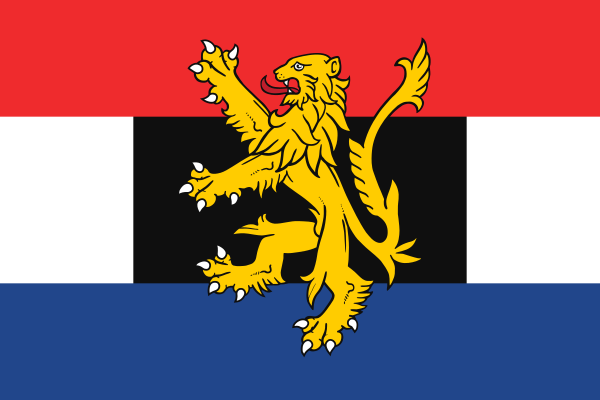
The Benelux is not a Member State of the European Union,
 but it's  fully part of the  territory of the EU, so what courts 
would be designated  if the Brussels I regulation is used?
 [image copied from my update on the issue of January]
Last year I wrote a blogpost on an unintended consequence of the consolidation of two treaties (Benelux Trademark Law and Benelux Industrial Designs Law) into a single treaty: the 2005  Benelux Convention on Intellectual Property. While the jurisdiction provisions in the treaty were copy-pasted from the older treaties, the treaty itself was a new one. In the EU, jurisdiction is governed by the Brussels I regulation (44/2001 until 2015; now a recast is in place), which states that jurisdiction in treaties from before that regulation (here: the 2 old Benelux treaties) would take precedence over the Regulation. This does not hold however for later ("posterior") treaties.

The Benelux judges seem never to have realized this and always based their jurisdiction on Benelux law, until in November 2013 the Court of Appeal of The Hague argued that clearly now Brussels I should take precedence; a choice with unintended consequences as Brussels I has never been written with a "common IP right to several member states" (as is the case with the Benelux trademark and the Benelux design) [note that jurisdiction for the community trademark is excluded from Brussels I; and that for the unitary patent Brussels I was changed to reflect the situation of a court common to several member states; in this case we are talking about several courts in 3 countries that may or may not have jurisdiction]. The The Hague court concluded that the Brussels I regulation prevailed, and was sure enough not to deem questions to the Court of Justice of the European Union necessary.


In October 2014 however, the court of first instance of The Hague was faced with the same question and suggested questions to CJEU and possibly the Benelux Court of Justice. The case concerns Brite Strike, which markets itself [copied from my previous post for convencience] ("Two police officers started Brite-Strike Technologies Inc. because they were simply not satisfied with what the "top makers" of tactical lights offered for the needs of police officers") Technologies Inc (a US company) v Brite Strike Technologies SA (a Luxembourg company) (ECLI:NL:RBDHA:2014:13187). The matter concerns alleged bad faith in the registration of the Benelux trademark Brite Strike by the Luxembourg company, which was a distributor of the US company. Article 4.6(1) BCIP would render the Luxembourg judge exclusively competent, while article 22(4) of the Brussels I regulation points to the judges of the Benelux (at least, that is one interpretation).

We are half a year further, and ie-forum reports the questions have been finalized and sent to CJEU in Luxembourg (Case C-230/15). The Luxembourg defendant meanwhile is without legal representation in the case and has not reacted to any of the proposed questions.

The first three questions are very similar to the questions suggested in October, while the fourth one has been dropped. the questions (now available in their official translation) are below:


1) Must the Benelux Convention on Intellectual Property (Trademarks and Designs) (BCIP) (whether or not on the grounds set out in paragraphs 28 to 34 of the judgment of the Gerechtshof Den Haag (Regional Court of Appeal, The Hague) of 26 November 2013) be considered to be a subsequent convention, with the result that Article 4.6 of the BCIP cannot be considered to be a special rule for the purposes of Article 71 of Regulation No 44/2001 [The Brussels I regulation]? 
If that question is answered in the affirmative: 
2) Does it follow from Article 22(4) of Regulation No 44/2001 that the Belgian, Netherlands and Luxembourg courts all have international jurisdiction to take cognisance of the dispute? 
3) If not, how should it be determined, in a case such as the present, whether the Belgian, Netherlands or Luxembourg courts have international jurisdiction? Can Article 4.6 of the BCIP (nonetheless) be applied with a view to (further) determining international jurisdiction?

[copying in my evaluation of October again] It is hard to evaluate what the answers of ECJ and/or BCJ will be, but indeed, the questions posed seem indeed to be the relevant questions. If I had to give my best guess of the answers I'd say:
I: This is a clash between following the letter of Brussels I (rendering BCIP posterior) or the intent of the EU and Benelux legislator (rendering BCIP anterior and applicable). Most clarity will be given if the answer is in the negative: when Brussels I is to prevail, a regulation should be applied which was never written with the peculiarities of the Benelux territory in mind, which is bound to result in more questions. However, the ECJ is known to favour the literal interpretation of Brussels I for the sake of predictability, so I think the answer will be: YES
II: The second question is regarding Brussels I 22(4) and gives jurisdiction to the courts of the Member State in which the deposit or registration has been applied for (this can be: the Benelux, rendering all courts competent; or where the physical application took place: at the trademark office in The Hague, Netherlands, rendering always NL competent), has taken place (idem) or is under the terms of a Community instrument (not applicable?) or an international convention (BCIP) deemed (the convention explicitly excludes the location of registration as a determinant in jurisdiction, and would point to the Benelux courts in general) to have taken place. I would assume that because of the last part of the sentence, courts from all 3 countries are competent.
III: This may be the trickiest question... IF the Benelux is to be regarded a separate territory for the application of Brussels I, then the internal law of Benelux (BCIP?) should determine jurisdiction. However, if multiple courts have international jurisdiction (in this case NL, BE, LU) under Brussels
I, normally they all have jurisdiction, and the lis pendens doctrine will render the court first seized competent to hear the case. Again, I don't see much reason why ECJ would not take a literal meaning of 22(4), render all courts competent, and the location within Benelux dependent on the court first seized.

More information:
There is not much more available on this case on the web. It was mentioned by the IPKat blog, the Marques blog and IPCuria; and the Dutch government has published some additional information (as they do with all CJEU cases) in Dutch.
----
This post was last updated on 8 September to include the formal translation of the questions and an update of available information on the web.